We are one of very few places in Bucharest serving Tarte Flambée made properly — with the right oven, the right ingredients, and the right intention behind it.
Tarte Flambée is one of the most honest dishes in French cuisine. Thin dough, crème fraîche, onions, lardons. Baked fast in a very hot oven until the edges char slightly and the centre bubbles. Eaten immediately, straight from the board, shared between everyone at the table.
It is not pizza. It is older, simpler, and in many ways more interesting.
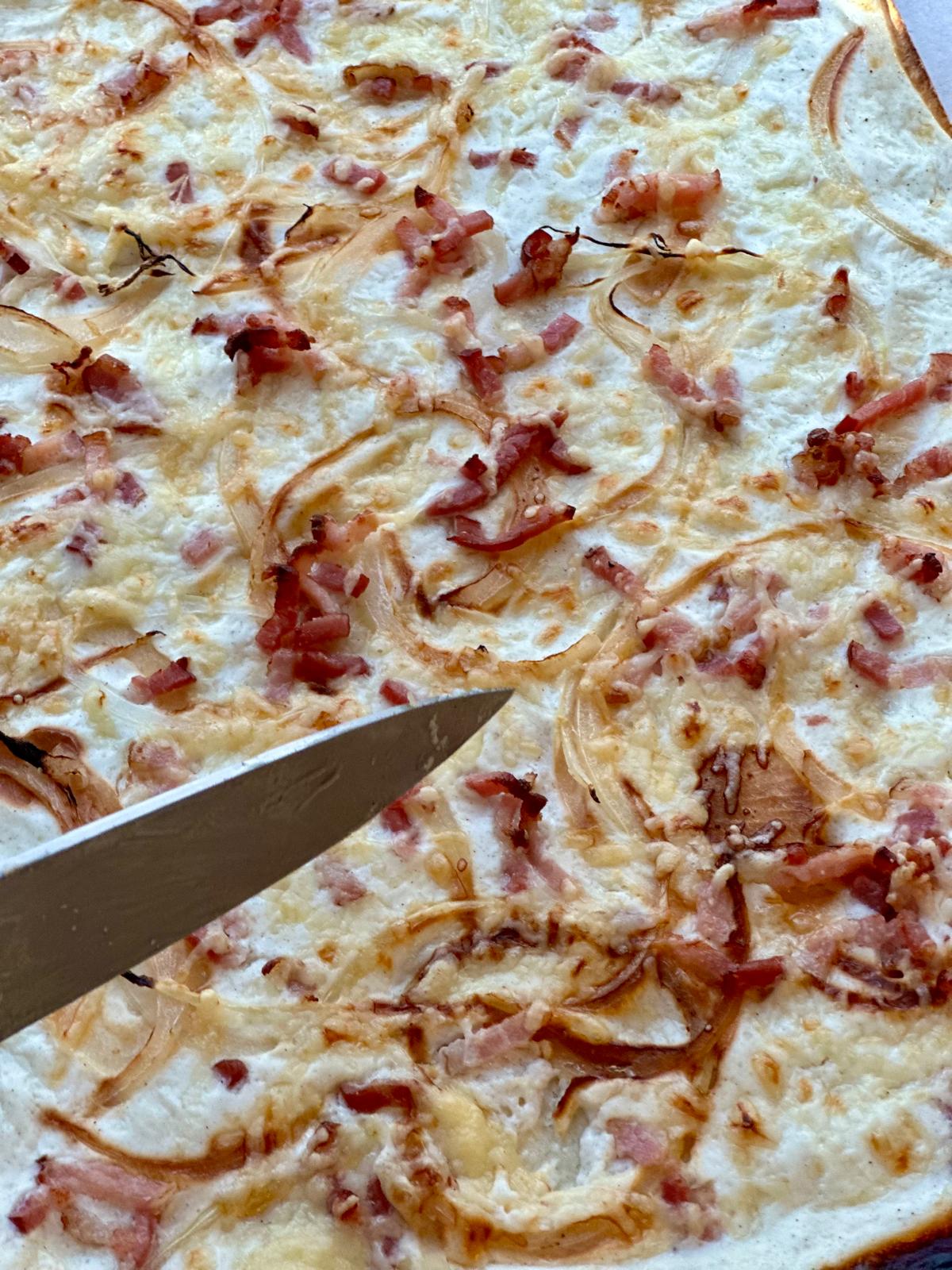
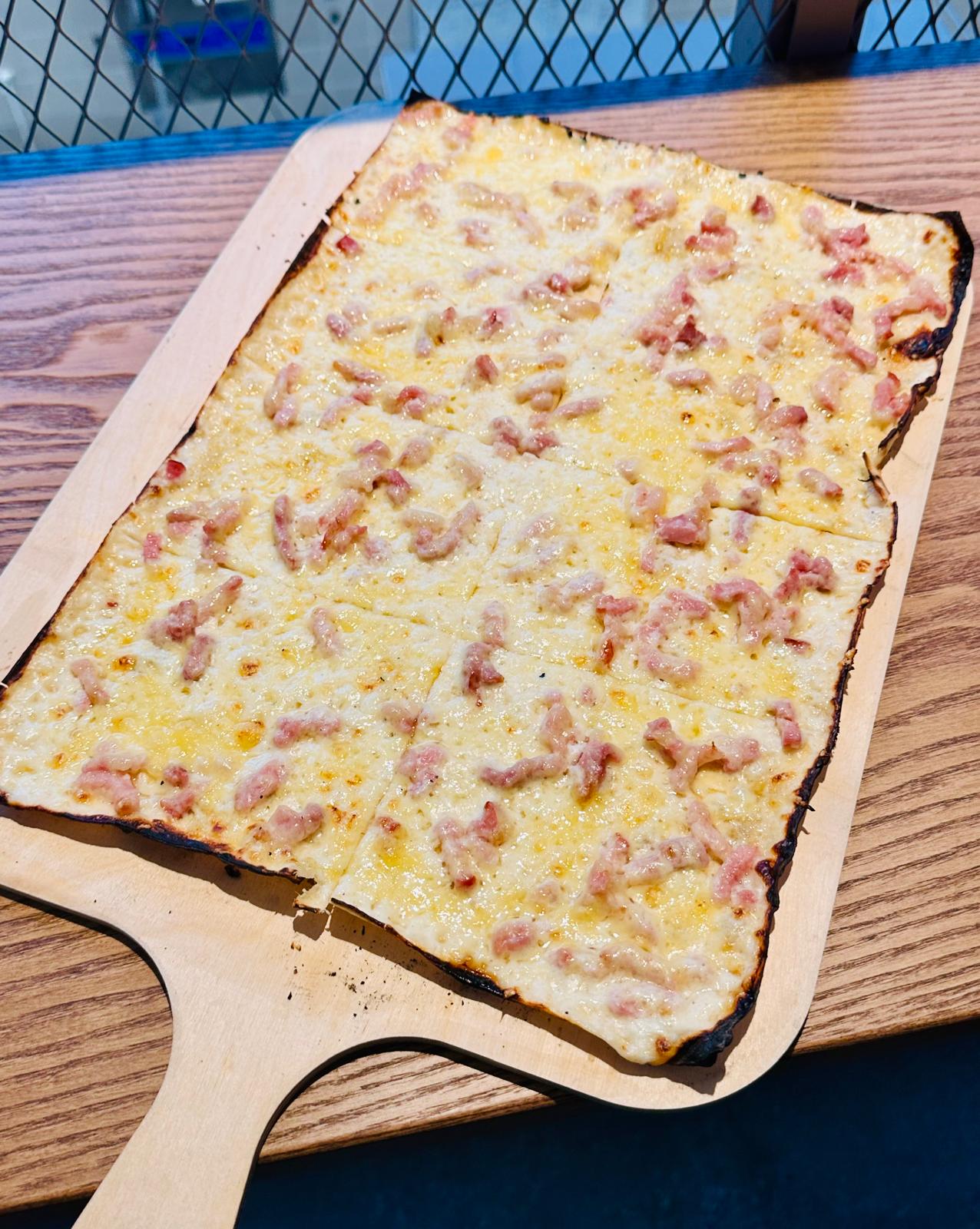
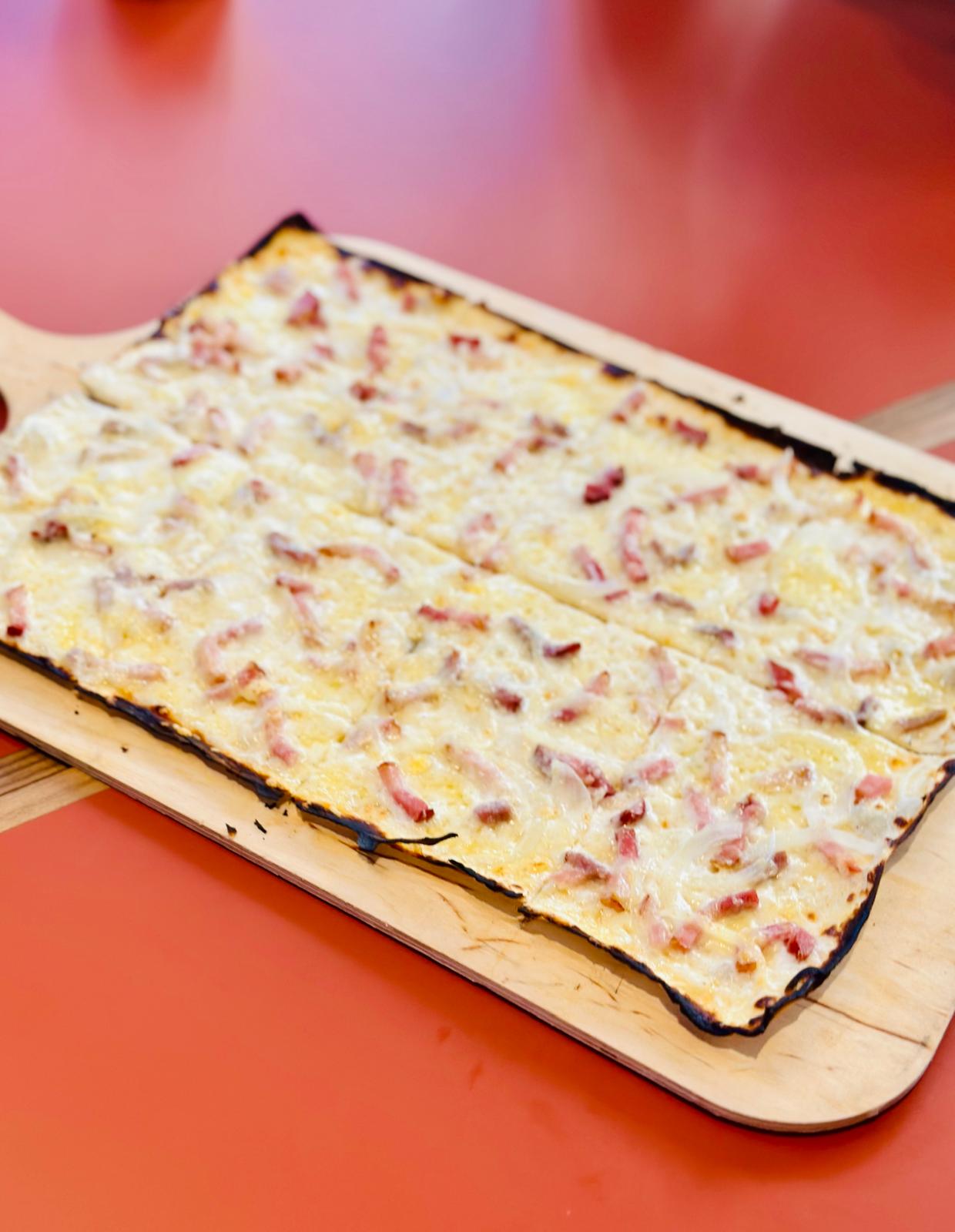
In Alsace, a meal around Tarte Flambée is never rushed. The winstub format — long wooden tables, shared dishes, local wine — is built around staying. You order Crémant or a glass of Riesling, the first Tarte Flambée arrives, conversation starts, another one follows. Nobody checks the time.
This is the rhythm we try to recreate at Gluten Glory. The dish is simple. The experience around it doesn't have to be. A table of four sharing Tarte Flambée and a bottle of Crémant d'Alsace on a weekday evening in Bucharest is, in our opinion, one of the better ways to spend two hours.
Tarte Flambée — or Flammekueche in Alsatian dialect — originates from the Alsace region of northeastern France, on the border with Germany. It was traditionally made by farmers on bread-baking days: a piece of dough stretched thin, topped with whatever was available, slid into the hot bread oven to test the temperature before the loaves went in.
Today it is the defining dish of Alsace — served in winstubs, the traditional Alsatian wine taverns, and in family restaurants across Strasbourg, Colmar and the villages of the Rhine plain. Across the border in Baden-Württemberg and the German Rhineland, it is equally at home.
Tarte Flambée is a shared dish. It arrives at the table whole, cut into rectangles, placed in the centre. Everyone takes a piece. Another one arrives before the last is finished. You eat until you say stop.
This is not incidental — it is the point. The format encourages conversation, slows down the meal, and creates a particular kind of table. You don't order your own. You share.
We brought this format to Bucharest because we like Tarte Flambée — but also because we believe in this way of eating together.
Getting Tarte Flambée right is harder than it looks.
The dough requires a specific technique — thin enough to crisp properly, strong enough not to tear under the weight of the topping. The crème fraîche base needs the right fat content and acidity. The oven needs to be very hot — hotter than most restaurant ovens are built to reach.
To make sure we were doing it properly, we sourced our oven directly from a Tarte Flambée producer in Alsace. The ingredients — crème fraîche, flour, the base materials — we source separately from a local Alsatian producer who shares the same standards. Everything arrives from the region.
From the same region, we also bring Crémant d'Alsace and wines from a small producer near Strasbourg — a natural pairing with Tarte Flambée that we're proud to serve.
We serve Tarte Flambée as it was intended — shared, hot, continuous. It arrives at your table and keeps coming until you tell us to stop.
Available as part of our all-day menu at Strada Copilului 20A, Bucharest.
Strada Copilului 20A, Bucharest · Open 7 days a week, from 8:00